
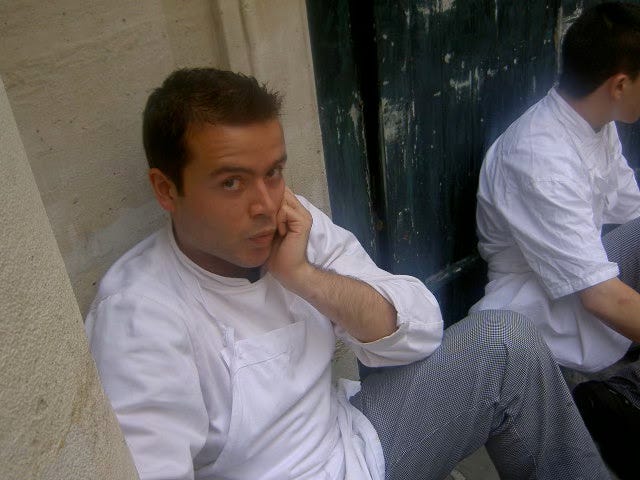
I spent eight months working for free in the best restaurant in the world in 2006, a practice that has become very common in the restaurant industry since. I did another 4 months stage the year before and both established my career. This is now 20 years ago and a lot has changed since.
In my own restaurants, I have had the pleasure of receiving and hosting many stages, and I think it might be useful from my position, which has allowed me to live both sides of it, to clarify what it means to be a stage, what you can potentially benefit from it, and what pitfalls to avoid.
What “Staging” actually is
A stage is not an apprenticeship, and should not be considered as such. It should be considered as a temporary arrangement with low commitment on both sides. You are not employed, which means you can leave. You are also not paid, which means that there is a limit to what can be expected of you and what you can expect in return. You come to learn, and in return, you do whatever work can make life easier for those who are taking the time to teach you things you would otherwise not learn anywhere else.
Why I did it
In 2005, before the iPhone existed, there was essentially no way to understand what the best kitchens in the world were actually doing unless you went there. There was no Youtube, no instagram feed. Just legends and rumours. The only way to access that knowledge was to physically be in the room.
I had five years of experience in mid-range restaurants in Copenhagen and Paris. I wanted to see the top. So I sent emails to every three-Michelin-star restaurant in Paris. One responded — Taillevent. I went for four months. It blew my mind, not least because of the produce — the level of ingredients I had never had access to before. And while I was there, I met someone who gave me a connection to El Bulli.
At the time, El Bulli was by any measure the best restaurant in the world. Four thousand people applied to work there every year, for free, for eight months. I became one of them. A lot of the work was tedious — we spent hours boiling squash and picking out the seeds because Ferran believed that was the squash’s essential flavor. Just a vision being executed by an army of hands with no business case to make sense of. Was it worth it? For me, completely. When I came back to Copenhagen, having worked at the best restaurant in the world, I got the job at what soon became the best restaurant in the world — Noma.
But I want to be clear: for a lot of people who were at El Bulli at the same time as me, it was not worth it. What you get out of it depends on what you bring to it yes, but not only. Bad planning, the wrong motivations and skewed expectations can cause a big risk.
The risk
You find yourself in a kitchen doing menial, senseless work for weeks, with no access to the things you came to see, and no way to make use of any of it when you leave. That happens. It happens more than you could wish for. It often happens in very large kitchens of very prestigious restaurants. The prestige is what attracts many young chefs with very low experience and what they get out of it might very well not be much. The culprit is going to the wrong place at the wrong time in your career.
In both my stages, I was offered the job to stay permanently. I turned both down. I liked the freedom of the limited commitment. But that same freedom means you need to use it — if a place is not delivering, leave. Politely, professionally, but leave.
How to avoid wasting your time? — Choose the right place.
A stage should be considered as a working vacation. 2-3 months, that you decide to invest in expanding your horizon.
Don’t go to amass names that sound good on your CV — it will not be worth it beyond the clout.
Get experience before you go. Five years minimum. A stage is about observation, and you cannot observe what you don’t yet have the foundation to understand. You are not there to learn the trade from scratch. You are there to expand your horizon.
Choose where you go based on what you actually need, not on prestige. Go somewhere that closes a specific gap in your cooking. Weak on fish? Go to the Basque Country. Curious about Nordic cuisine? Go to Copenhagen or Stockholm. The right stage for you is not the most famous kitchen, it’s the kitchen that inspires you right now. Not your CV or your ego.
Choose a city. A large culinary city gives you options. If the first place doesn’t work, you can find another. That flexibility is worth more than you think.
Keep the kitchen small. Ten people maximum. Ten good people in a kitchen worth travelling for is ten people you can actually learn from. Fifty people means forty-nine others standing between you and everything you came to see. It is hell to manage that many people (I know, I tried) and most of it is just chaos.
Two months maximum. Think of it as a working vacation. You wouldn’t stay on holiday for six months. The returns diminish. Two months, planned well, is enough. It can be split between several places if you like, and leaving open space for just dining in the city or getting to know other places will be a smart move.
The stage
You decided to go, found one or more places you want to explore. Here is what to keep in mind once you walk through the door:
Do not accept abuse. Needless to say, if you are not comfortable there, get out. No future employer that you will ever want to work for will ever expect you to accept being abused physically or mentally. A blacklist does not exist; if it did, I would have known, trust me.
Behave. Respect people around you, and they will respect you back. If you have traveled to a place to see what they do, chances are that the stakes are high and the intensity is very hard. Be an asset to whoever takes the time to teach you things, and by far most chefs will pay you back. If they don’t? Give it a couple of days, and if still not? Leave.
Align your expectations. A great restaurant is a busy restaurant, and the hours will be long, and your feet will hurt.
Leave your ego at the door. No matter your level of experience, listen carefully and take notes. You did not travel there to teach them a few tricks of your own. Make the most of your time by making it a pleasure to teach you things. Remember that the person looking after you in your section didn’t necessarily ask for you. They have work to do, and you can be an asset or be trouble. Be focused, be humble, be useful. Ego is the fastest way to end up in the corner doing nothing interesting for the rest of your time there.
Enjoy it. Ask questions, make friends, shape ideas, and get inspired. You learn both from things you like and the things you dislike. The beauty is that you can strive to both achieve the first and correct the second when it is your turn to lead.
The bottom line
There is a legitimate debate around the stage as an institution, on power, labor, and who ultimately benefits the most from the work done. The debate is very welcome, and I have to be honest about where I stand in it: I believe in people’s ability to make good decisions for themselves first and foremost. What is important is to reach a level of professional and personal maturity before exposing yourself to a system that can give you much, but where you matter very little. By calling it what it is and understanding it well, you can benefit from it, rather than be exploited.
A stage cannot form you as a chef. It can only expand your horizon and, at best, inspire you. If you go before you’re ready, without a clear reason, just to chase prestige, you will waste your time and possibly put yourself off cooking completely. But if you go with five years behind you, a specific curiosity driving you, a city to land in, and a small kitchen to work in — it can open doors you didn’t know existed.
Nobody has to stage. There is no single path to the top of this profession. But done properly, a working vacation in a kitchen that genuinely interests you is one of the more interesting things you can do with your time, and it can definitely be worth your time and investment.
The video is live. Consider it the introduction. A lot is still to come — red flags, how to actually get in the door, what makes a great stage versus a wasted one. Watch it here and tell me what you need. I’ll build the rest around your questions.
An easy subscription after reading this column. Even easier when I realized that you had Relæ!!
GREAT read. As someone looking to get back into the industry with a new focus on education and growth, this was very insightful. Thank you!